
Presentation2026-08-06T16:52:24-04:00

PRESENTATION

NURTURING UNIQUENESS

Since 1981, the École de danse contemporaine de Montréal has been training professional dancers who have gone on to earn national and international recognition. Recognized for its leading-edge, rigorous training, the School offers a 3-year college level education based on the mastery of contemporary dance techniques, the development of artistic and intellectual knowledge and versatility of performance.

A NEW, REVISED PROGRAM FOCUSED ON THE PROFESSIONAL FIELD

At EDCM, students develop much more than just solid technical mastery. They train as contemporary dance performers by cultivating their presence, sensitivity, creativity, artistic intelligence, and autonomy.
At the heart of the program, performance is enriched by a variety of technical and aesthetic approaches, creative and performance experiences, and encounters with artists in the field.
The program also fosters an understanding of professional realities, a rich artistic culture, a focus on the artist’s well-being, and the adaptability essential for thriving in a constantly evolving field.

PROGRAMS

The School offers a full-time three-year Diploma of Collegial Studies (DEC 561.BB) in collaboration with cégep du Vieux Montréal and approved by the ministère de l’Éducation et de l'enseignement supérieur.

Specific training is provided by the School while general training (French, Philosophy, English, Physical Education and complementary courses) is offered by the cégep du Vieux Montréal. Students can also take these courses in English due to an agreement between Cégep du Vieux Montréal and Dawson College. However, for students from other Canadian provinces, the French Exit Exam is mandatory for the DEC diploma (DCS).

The School also offers an Attestation d’études collégiales program (AEC NRC.05) which is composed of only the specific dance courses. Only international students are eligible.

Spaces are very limited in these programs with twenty spaces available in all.

In addition to being talented and in excellent physical condition, students must demonstrate creativity, motivation, discipline and passion for their art. The program is very intense and demanding and therefore requires exceptional drive and motivation. Training to become a professional dancer requires a serious commitment throughout the duration of the studies, demanding day, evening and some weekends availability.

A DAY IN THE LIFE OF A DANCE STUDENT

Courses in dance health, anatomy, and technique are included in the students’ schedule. These classes are typically followed by classes in performance, improvisation, and partner work.
The program also focuses on courses in creative research, interdisciplinary approaches, and creative methodology. Performance classes are when students gain hands-on experience in the performing arts, from the choreographic creation process to presenting a show in front of an audience.
The school day is rounded out by courses in dance history and contemporary dance practices, as well as introductory and career management courses, in addition to regular core curriculum instruction. The general education curriculum includes 14 courses, including French, English, physical education, and two elective courses.

CLASS SCHEDULE

  Specific training General training
1st Year
  • Fundamental Techniques and New Practices 1
  • Creative Research 1
  • Interpretation 1 and 2
  • Complementary Techniques and Practices 1 and 2
  • Career Introduction
  • Dance Health
  • Fundamental Techniques 2
  • Partner Work 1
  • New Practices 2
  • Anatomy Applied to Dance 1
  • History and Contemporary Practice of Dance
  • Introduction to College English
  • Literary Genres
  • Knowledge and World Views
  • Human Beings
  • Physical Education (2)
2nd Year
  • Fundamental Techniques 3 and 4
  • Complementary Techniques and Practices 3 and 4
  • Interpretation 3 and 4
  • New Practices 3 and 4
  • Partner Work 2
  • Anatomy Applied to Dance 2
  • Creative Methodology
  • History and Contemporary Practice of Dance
  • Career Management 1
  • Interdisciplinary Approaches
  • Literary Themes
  • Applied Themes in English
  • Applied Ethics
  • French 1
  • Physical Education (1)
3rd Year
  • Fundamental Techniques 5 and 6
  • Complementary Techniques and Practices 5 and 6
  • Performance 5 and 6
  • New Practices 5 and 6
  • Creative Research 2
  • Career Management 2
  • French 2
  • Complementary Courses (2)

SUMMER SCHOOL

Every year, throughout the three-year program, all students must enrol in the École de danse contemporaine’s Summer School and pay the corresponding registration fees.

Summer School is an invaluable way for students to learn new approaches to dance in an enriching, stimulating environment. Given the demands and intensity of the full time program, the Summer School is also designed to maintain the students’ physical form throughout summer (2 weeks).

FAQ

The program is intended to help students acquire the skills that are sought in the job market. The School offers training that meets the strict standards of the major contemporary dance companies. Students have numerous occasions to build relationships with potential employers and prepare for their entrance into the professional milieu. On an international level, our graduates perform on stages in the United States, Europe.

In Quebec, there are approximately 40 choreographers and dance companies that require qualified graduates from the École de danse contemporaine de Montréal. The School also works with several independent and upcoming choreographers.

No scholarship program is offered by the School for the moment. Students enrolled in the professional program (DEC and AEC) are eligible for loans and grants provided by the Ministry of Education, in Quebec. To learn more, visit afe.gouv.qc.ca.

Students in the DEC program attend both the École and Cégep du Vieux Montréal; therefore, they must meet the requirements of both facilities in terms of registration, tuition fee payments, and so on. Those in the AEC program are only students of the École de danse contemporaine de Montréal.

No. Admissions only take place in the fall.

The professional training courses (performance, technical classes, etc.) are given in French. However, as a result of an agreement signed between Cégep du Vieux Montréal and Dawson College, students who wish to do so can take the general courses in English.

However, for students from other Canadian provinces, the French Exit Exam is mandatory for the DEC diploma (DCS).

There is no difference between the two programs in terms of dance training. The AEC program is offered to students from abroad.

If you pass the audition, you will be admitted to the program and credit will be given for general courses (French, philosophy, etc.) that have already been completed. All students must pass the standard French exam and take the art history course.

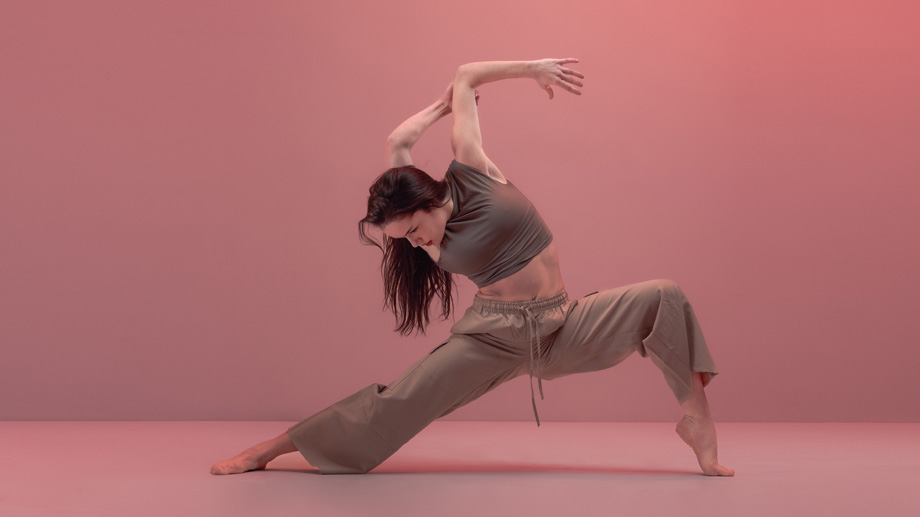
Photo: Juan David Padilla | Dancer: Lilly Bouvier

Go to Top