Fundamental Techniques – Contemporary
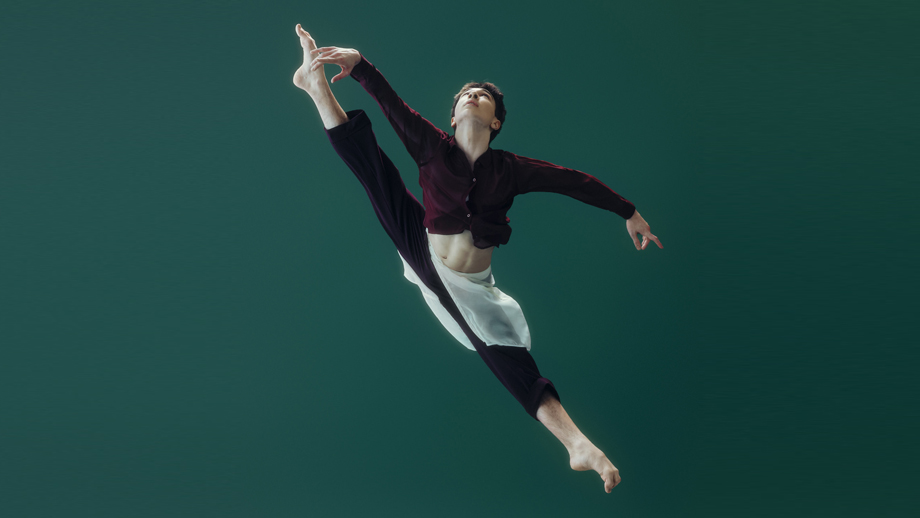
These classes explore the essential elements and principles that define this living art form. They emphasize a wide range of movement principles designed to develop the performer’s versatility and expressiveness within a traditional class structure.
Students are encouraged to release weight, explore curves, spirals, and undulations of the torso, and pay close attention to breathing to improve control, release, and musicality while navigating the complexity of rhythms, tonal modulations, and textural nuances.
The focus is on using weight and movement organically, relying on gravity for dynamic movement qualities through movements such as pliés and tendus. Floor work and transitions reinforce agility and spatial awareness by utilizing various points of contact with the floor.
Engaging the core facilitates fluid transitions and dynamic phrases, while exploring parallel alignments enhances overall coordination and segmental isolation. Variations in amplitude and dynamics enrich the body’s vocabulary, while attentive listening to internal sensations and the external environment allows for the expression of personal authenticity.
Complementary techniques and practices – Ballet
These classes cover the fundamentals of classical technique through a traditional structure including barre, center, petit and grand allegro, with a particular focus on ballet-specific vocabulary. A theoretical component is included, focusing on learning and memorizing terminology.
Classes aim to develop a mechanical understanding of simple and complex ballet movements, effective alignment, precision of lines, and increased fluency in classical vocabulary.
Students refine their coordination, sense of rhythm, and understanding of phrasing, while exploring how classical technique can enrich and support other forms of dance. A somatic approach is integrated, emphasizing breathing, spatial awareness, the release of unnecessary tension, and an attitude that values a playful and open approach to ballet.
New Practices
New Practices courses introduce students to innovative movement approaches derived from contemporary choreographic research and somatic explorations. Students will be guided through practices such as Gaga, Flying Low, and the Rubberband Method, each offering unique gateways to physicality, awareness, and expressiveness.
The courses promote the development of sensory perception, responsiveness, and dynamic presence by encouraging curiosity, risk-taking, and embodied imagination. These methods allow students to broaden their interpretive range, nurture their relationship to gravity, space, and improvised structures, and integrate emotional, sensory, and physical dimensions into performance.
The new practices classes aim to develop a body that is available, curious, and adaptable—able to navigate a variety of artistic contexts with nuance, engagement, and openness.